

Skin cancer is the most common cancer in the U.S., with more cases diagnosed annually than all other cancers combined. Yet, less than 1 in 5 people have regular skin exams.
To learn more about skin cancer and screening, WellTuned spoke with Dr. Amy Vehec, a medical director at BlueCross BlueShield of Tennessee.
“Early detection is critical because melanoma skin cancer can spread to other organs,” Dr. Vehec says. “Even with cancers that are less likely to spread, the cosmetic impact will be less with early detection.”
What you need to know about skin cancer screening
Dr. Vehec: Here’s what you need to know:
- Do self-exams at home. Pay attention to your skin when bathing and dressing. Do a visual check of your entire body. If you have a spot that looks or feels different, visit your dermatologist to have it checked. Even if a spot looks okay but starts itching more than normal, it should be checked.
- The ABCDE rule is mainly used to describe common characteristics of early melanoma. But this can be a good guide to use as you check your skin. During your self exam, look for:
- A – Asymmetry (one half of a mole doesn’t look the same as the other half),
- B – Border irregularity (jagged or irregular margins),
- C – Color variation (different colors like red, blue, black, grey or white),
- D – Diameter (6 mm or larger, about the size of a pencil eraser),
- E – Evolution (changing in size, shape or color).
- Know if you need regular professional screenings. You should get screened regularly if you have a family history of skin cancer, fair skin with red or blonde hair, history of blistering sunburns in childhood, or have used tanning beds. While fair-skinned people have the highest risks, darker-skinned people are also at risk and need to take precautions too.
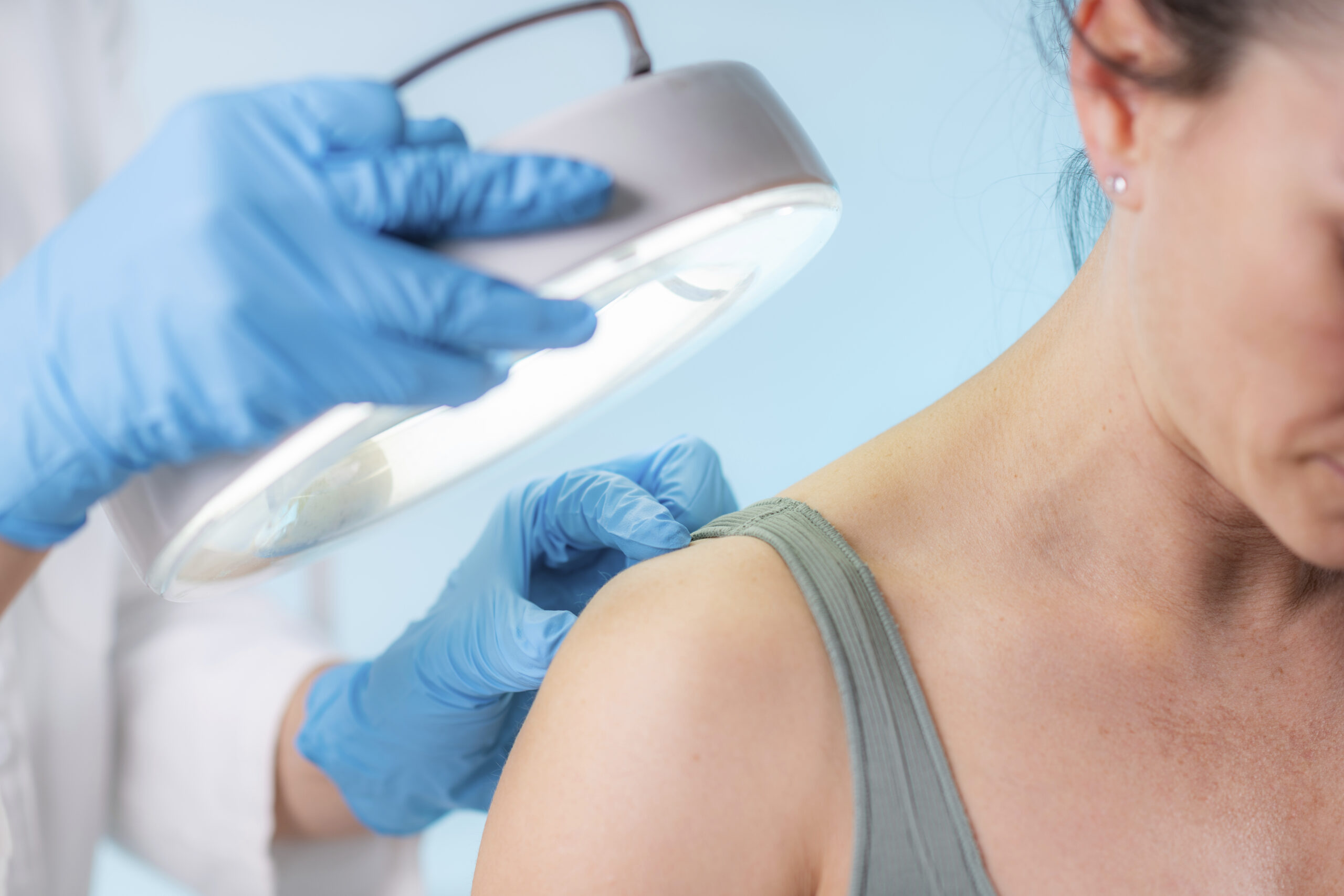
- Understand what happens during a screening. The dermatologist will look at all of your skin, usually with a lighted magnifying glass. If there are areas of concern, they will determine if biopsy or other testing is needed.
- Protect your skin year-round. Sun protection is important even in winter. UV rays are present in all temperatures and all seasons. Even on a cloudy day, close to 80% of UV rays can penetrate the clouds. UV rays can be reflected by snow and ice, as well. Sun damage accumulates over a lifetime, so you need protection on Tennessee’s sunny days — even in winter.
What to do if you notice a concerning spot
Dr. Vehec: See a dermatologist. If you notice any new moles, or if the ones you have look different, tell your doctor or nurse.
Some skin cancers, like melanoma, can be life-threatening. Others, like basal cell and squamous cell cancers, are often easier to treat. Since it is often difficult to tell which skin lesions might be dangerous, always have a dermatologist evaluate any new moles or spots that you find on your skin.
“The biggest risk factors for developing skin cancer are having skin that burns easily, older age, tanning bed use, sunburns in childhood, frequent sunburns, and conditions or treatments that suppress the immune system,” Dr. Vehec says. “Don’t wait to get your skin checked— early detection can save lives.”
More from Dr. Amy Vehec on WellTuned

Get more information about specific health terms, topics and conditions to better manage your health on bcbst.com. BlueCross BlueShield of Tennessee members can access wellness-related discounts on fitness products, gym memberships, healthy eating and more through Blue365®. BCBST members can also find tools and resources to help improve health and well-being by logging into BlueAccess and going to the Managing Your Health tab.