

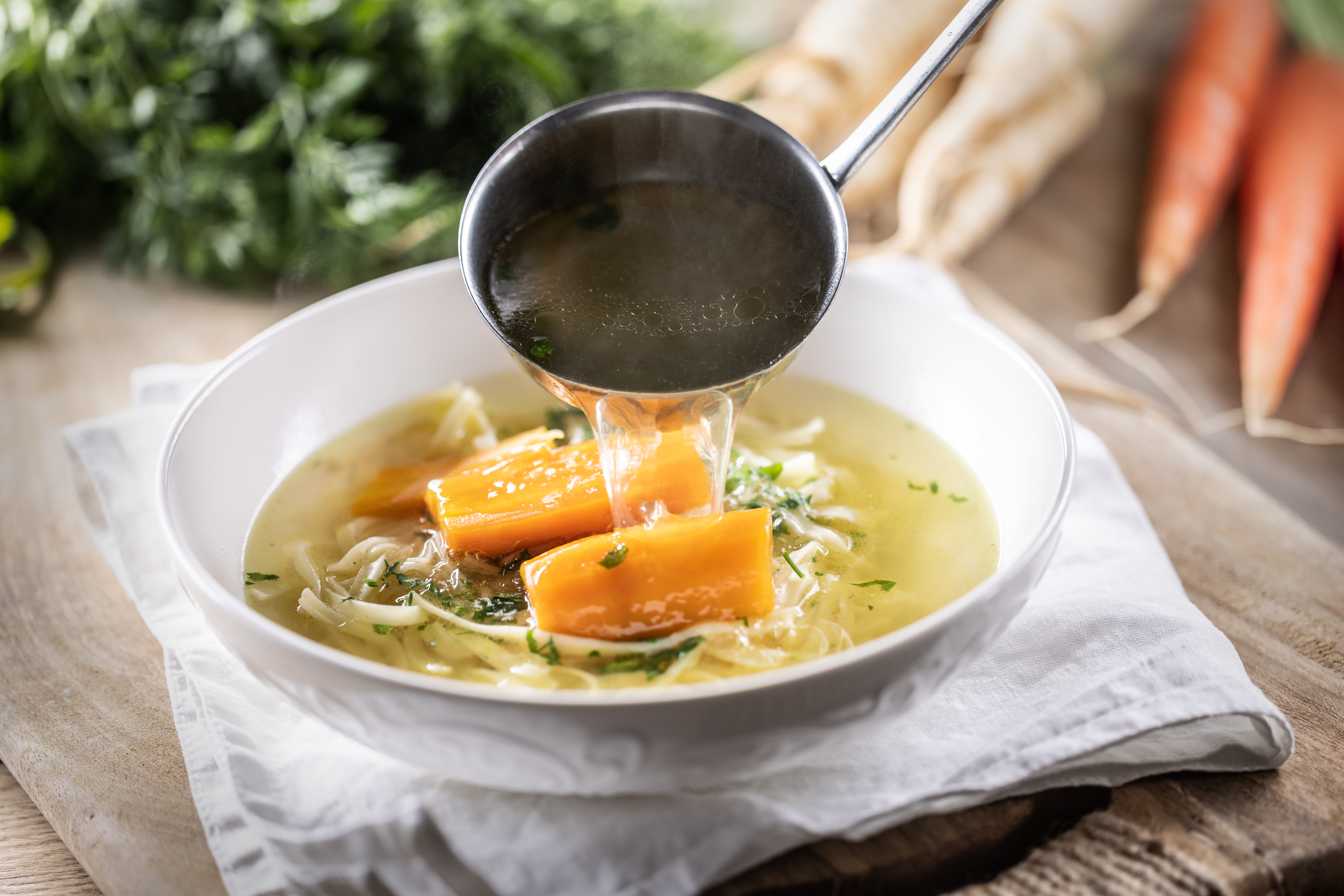
Soup is a go-to when you’re under the weather, but there’s solid science behind this tradition.
To learn more about the healing powers of soup, WellTuned spoke with Janet Seiber, a registered dietitian nutritionist educator at BlueCross BlueShield of Tennessee.
“Eating soup when you’re sick is something that many cultures have done for centuries,” Janet says. “Soup is a comfort food that helps soothe a sore throat, but it also can provide key nutrition benefits to healing.”
She explains that can soup helps us recover from sickness because:
- It provides hydration.
- It’s easy to digest when your appetite is low.
- The warm liquid helps soothe sore throats and ease congestion.
- Nutrient-rich broths provide minerals and electrolytes needed for recovery.
How does soup help with hydration?
Janet Seiber: When we’re sick, we tend to eat less and lose electrolytes through sweat and gastrointestinal symptoms. Water is great for hydrating, but it doesn’t have the electrolytes that broth-based soups have. Most soups have sodium from the seasonings, as well as potassium from the vegetable and protein ingredients. Be sure to check labels for sodium content if you’re on a low-sodium diet or check with your doctor.
Why is chicken noodle soup the ‘go to’ soup when we’re sick?
Janet Seiber: Chicken provides a protein source that supports the building blocks of the immune system. Noodles offer a complex carbohydrate for energy and muscle health. Carrots provide vitamin C, which attacks infections and heals wounds. Chicken broth has selenium, a trace mineral, that helps lower inflammation.
Note that not every chicken soup has anti-inflammatory properties. Canned, ultra-processed versions with minimal to no vegetables don’t provide anti-inflammatory support. Soups with colorful vegetables like carrots and celery, and fresh seasonings like garlic, pepper or parsley, help with inflammation. The protein, vitamins, and minerals in these ingredients help the body fight off illnesses. And the warm broth and vapor soothe congestion and sore throats.
How to choose the right soup when you’re sick
Janet Seiber: Clear broth is a good choice if you can’t hold down anything more due to GI symptoms. Once you can tolerate more, chicken soup or vegetable soup provides more calories and nutrients.
In general, broth-based soups are healthier than cream-based soups. Choose milder seasoned soups with bay leaf, basil, rosemary, parsley or garlic. Avoid hot spices like hot peppers, sriracha and cayenne.
Aundra Lafayette’s chicken noodle soup recipe from WellTuned
How to make your chicken noodle soup healthier
Janet Seiber: Homemade chicken noodle soup with vegetables, chicken and noodles is a nutritious option. If you’re unable to make your own, look for a store-bought option that has more colorful vegetables.
When comparing labels, check for plenty of vegetables and protein. Canned soup typically has more sodium due to the need to extend its shelf life. Always check the food label for sodium content.
To power up canned soup, add a handful of fresh spinach, shredded carrots or leftover chicken. This can transform an average soup into a heartier, healthier meal.
More from Janet Seiber on WellTuned

Get more information about specific health terms, topics and conditions to better manage your health on bcbst.com. BlueCross BlueShield of Tennessee members can access wellness-related discounts on fitness products, gym memberships, healthy eating and more through Blue365®. BCBST members can also find tools and resources to help improve health and well-being by logging into BlueAccess and going to the Managing Your Health tab.