

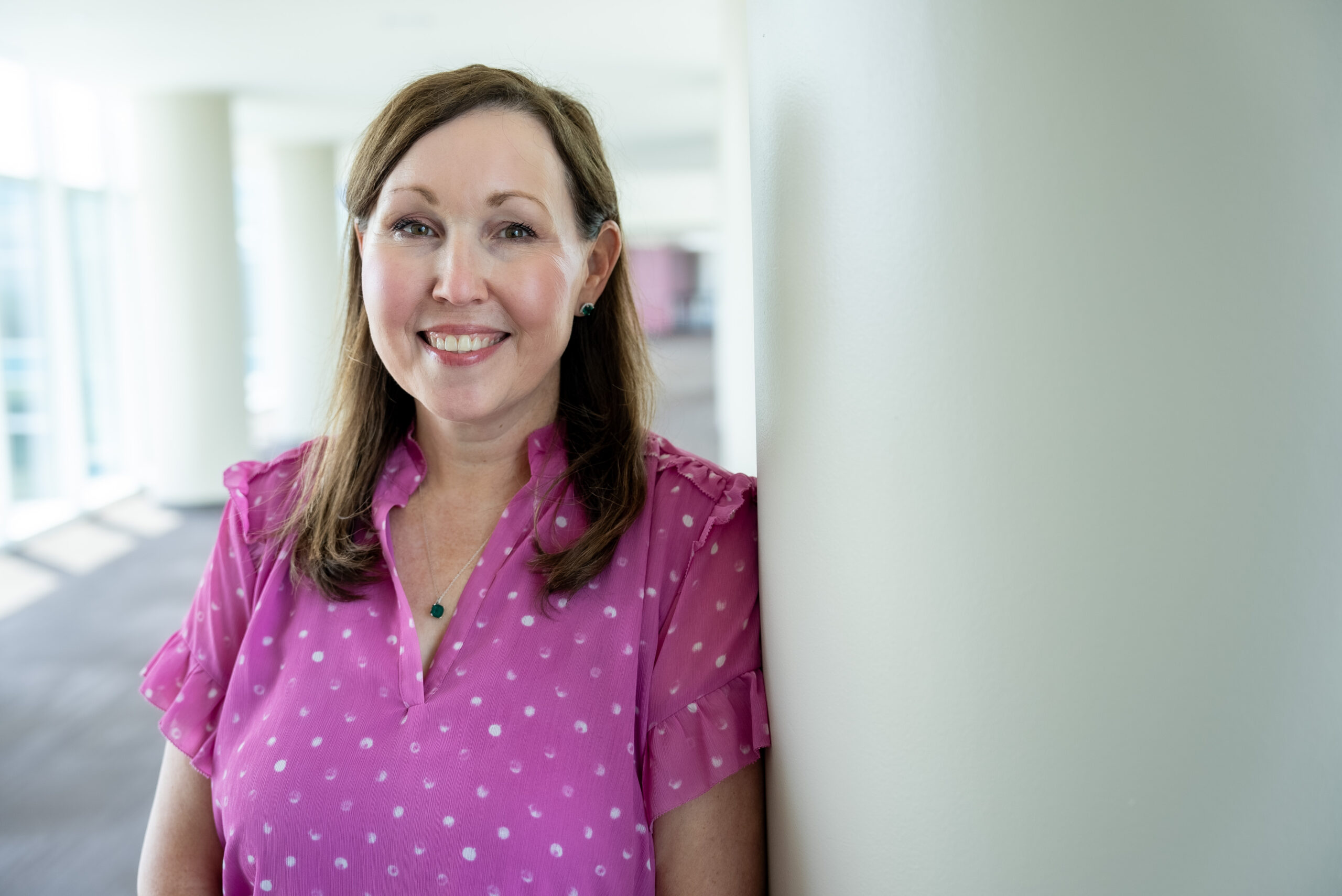
When BlueCross Member Experience Manager Carmen LeVally talks with people about organ donation, the conversation comes straight from the heart.
As a volunteer ambassador with Tennessee Donor Services, Carmen shares a message that’s deeply personal: Organ donation changes lives, and the myths surrounding it keep too many people from saying yes.
Carmen knows this because at 24, she received a kidney transplant. It gave her a second chance at a life that seemed to be slipping away.
A different teenage experience
At 16, Carmen began experiencing symptoms of a rare autoimmune condition where the body attacks its own healthy organs. In her case, the blood vessels in her kidneys became the target.
The condition put her in the ICU during high school. She underwent chemotherapy followed by maintenance medication. But neither did much to stop the disease from progressing. Doctor visits and lab work became routine parts of her life.
“I never got to be a normal teenager or college student,” Carmen says.
For years, she managed the condition as best she could, knowing her kidney function was declining. Then came the conversation she’d been dreading.
Carmen remembers when her doctor first used the word “transplant.” He’d put her on medication that stopped the disease from flaring up, but her kidneys were already severely damaged.
“I was scared,” Carmen says. “But when you’ve dealt with a chronic disease for so long, that was life changing.”
A mother’s selfless gift
Unlike many people who wait years to find a donor organ, Carmen had an option: Her mother, Donna Ledbetter, wanted to be tested to see if she was a match.
The testing process for living donors is extensive. It includes physical health screenings, psychological evaluations and careful monitoring to ensure the donor won’t develop kidney failure later. High blood pressure, obesity, or autoimmune conditions can all rule someone out. Carmen’s mother passed every test.
The transplant took place in 2003. Her kidney function began improving immediately. Five weeks after surgery, Carmen returned to her job in market research.
“As a recipient, it really gives you a different perspective on life,” Carmen says. “You appreciate the mundane things in life because you’ve been to where your health is on the brink. You really do learn to live each day to the fullest.”
An unexpected gift
Today, Carmen’s kidney function and health are excellent. Her mother, who will turn 75 in August, is thriving. Carmen calls her “the energizer bunny” because she is always active. The kidney donation never slowed her down.
And Carmen got to experience something doctors told her might never happen: She became a mother. Her son is now 12. The 6th grader keeps her busy with his active schedule and reminds her daily of what the transplant made possible.
Because of her experience, Carmen has since wanted to help others who need transplants. She worked for several years with an organ procurement organization in Georgia and volunteered at one in Tennessee, which inspired her to obtain a nursing degree.
Her personal health journey and hospital nursing experience have shaped how Carmen approaches her work as Medicare Advantage Member Experience Manager at BlueCross. As someone who understands the health care system both as a patient with a chronic condition and as a nurse, Carmen brings a unique perspective in helping members navigate their own healthcare challenges.
Debunking myths and spreading awareness
Now, as a volunteer Donate Life Ambassador with Tennessee Donor Services, Carmen works to increase the number of registered tissue and organ donors. She knows organ donation is a hard topic to talk about. She also knows that myths keep many from registering.
“There’s a lot of misinformation out there,” Carmen says.
One misconception: that anyone who dies can be an organ donor. The reality is much more specific. Only a small number of people die in the manner required to donate organs. This is why wait lists remain long even as more people register.
However, almost anyone can be a tissue donor, providing corneas, veins, bone, skin, and ligaments that help others.
Tennessee Donor Services handles the retrieval and matching process for organs and tissue. They also work to educate the public, partnering with hospitals, driver’s license centers, and employers during National Donate Life Month in April and throughout the year.
Carmen volunteers at health fairs, speaks at hospitals, and helps answer questions at workplace events.
A perspective that lasts
“I’ve never met a recipient that didn’t have that perspective of truly appreciating life,” Carmen says. “And I’ve never met a donor family that regretted their donation.”
For Carmen, advocacy work is about paying forward the gift her mother gave her—and helping others understand that organ donation creates ripples of hope that extend far beyond what most people realize.
“I know how much organ donation changed me,” she says. “I want to help others.”
**************************************************************************************
Organ donation facts
The need:
- More than 120,000 Americans are waiting for a lifesaving organ donation
- About 2,700 Tennesseans are on organ donor lists
- About 20 people die each day waiting for a transplant
The impact:
- Through organ donation, one person can potentially save eight lives
- More than a million tissue transplants are done each year (corneas, heart valves, bone, skin and connective tissue)
How to become a donor:
- Register at org
- Select “yes” on your driver’s license application or renewal
- You can choose to donate all organs or specify which you’d donate
- Learn more at Donate Life Tennessee or Tennessee Donor Services

Get more information about specific health terms, topics and conditions to better manage your health on bcbst.com. BlueCross BlueShield of Tennessee members can access wellness-related discounts on fitness products, gym memberships, healthy eating and more through Blue365®. BCBST members can also find tools and resources to help improve health and well-being by logging into BlueAccess and going to the Managing Your Health tab.