

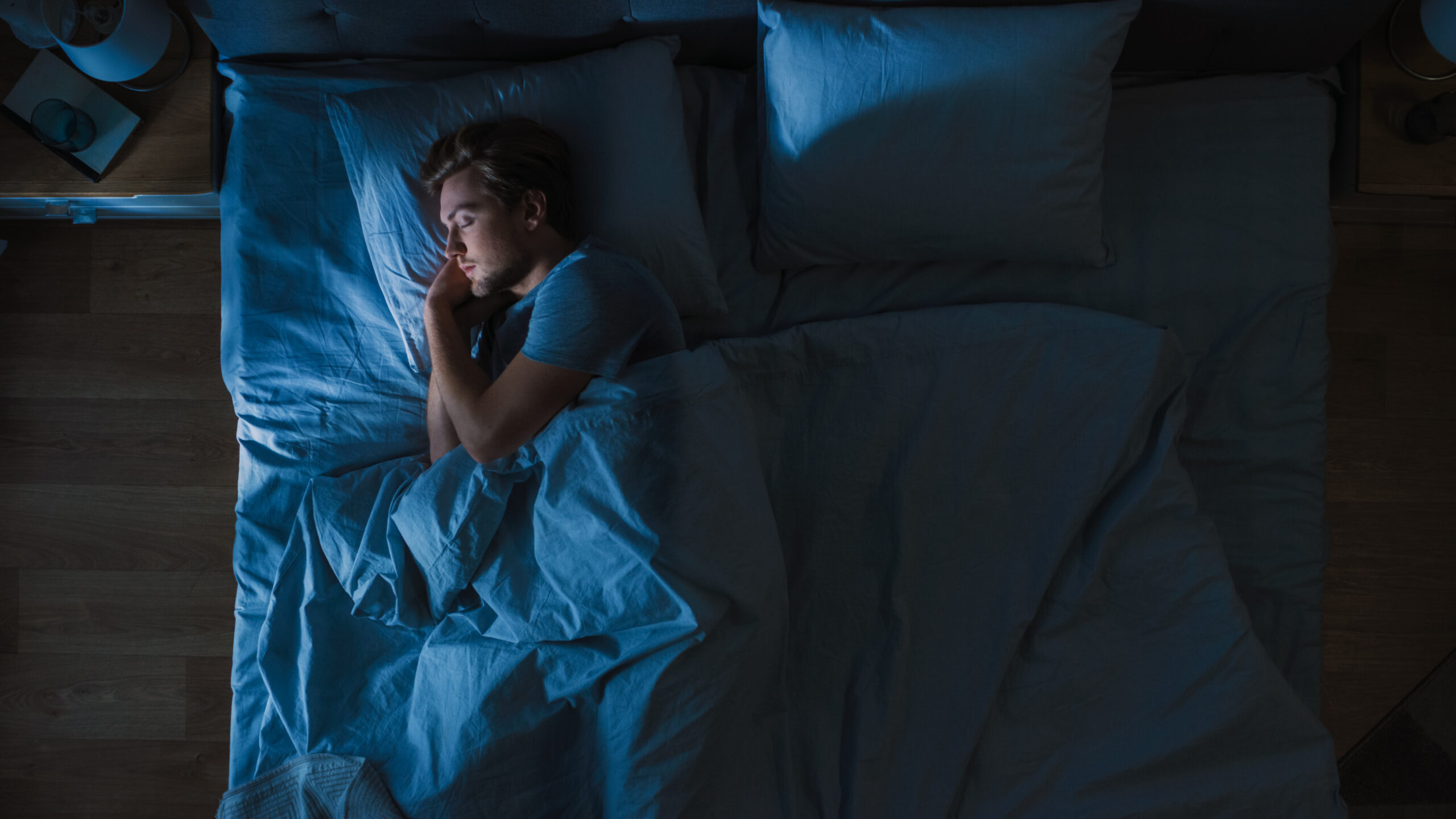
If you feel like you don’t sleep well in the summer, you’re not imagining it. Nighttime temperatures above 75° can cut REM sleep by 20%, leaving you feeling sluggish and tired the next day.
WellTuned spoke with Dr. Andrew Vernon, a medical director with BlueCross BlueShield of Tennessee, to learn how heat and light affect your sleep and what you can do about it.
How does heat affect your sleep?
Dr. Vernon: Your body’s natural temperature drops in preparation for sleep. You need to fall into deep sleep, or REM (rapid eye movement) sleep, so you can rest, and your body can repair itself.
The ideal sleeping temperature is about 60-65 degrees. But many set thermostats in the mid-70s to save money. If your bedroom is too warm, you may not get the REM and slow wave sleep that you need for a healthy sleep cycle.
How does summer daylight affect sleep?
Dr. Vernon: Summer can impact our health, both physical and mental. When the days are long, we tend to stay up late. As a result, we may spend fewer hours in bed and get less sleep.
Your circadian rhythm regulates your sleep cycle. Inside your brain, the hypothalamus regulates many functions in your body, including your sleep cycle. It takes cues from temperature and the amount of light you’re exposed to. Extended daylight may delay your brain’s release of melatonin, a hormone that helps you sleep.
What can you do to stay cool while you sleep?
Dr. Vernon: Here are ways to keep your bedroom cooler:
- Use a fan in your bedroom
- Sleep in lightweight clothing
- Use lightweight bedding or “cooling” fabrics
- Use a cold compress or ice packs to cool off
- Drink ice water before bed
- Experiment with sleeping positions to find one that helps you stay cooler
How can you block out summer light?
Dr. Vernon: To create a darker sleep environment:
- Install blackout curtains in your bedroom
- Wear a sleep mask
- Avoid screen time before bedtime
What other tips help with summer sleep?
Dr. Vernon: You can combine these strategies with good sleep hygiene practices:
- Establish a calming bedtime routine
- Stick to the same bedtime each night
- Wake up at the same time each day
- Keep electronics out of the bedroom
- Skip naps during the day
- Avoid caffeine or alcohol late in the day
“A good thing about summertime is that people tend to be more physically active,” Dr. Vernon says. “Regular exercise can help you sleep better at night. Just don’t do vigorous physical activity immediately before bedtime.”
More from Dr. Vernon on WellTuned

Get more information about specific health terms, topics and conditions to better manage your health on bcbst.com. BlueCross BlueShield of Tennessee members can access wellness-related discounts on fitness products, gym memberships, healthy eating and more through Blue365®. BCBST members can also find tools and resources to help improve health and well-being by logging into BlueAccess and going to the Managing Your Health tab.